mercredi 27 février 2019

Alan Wake [english]

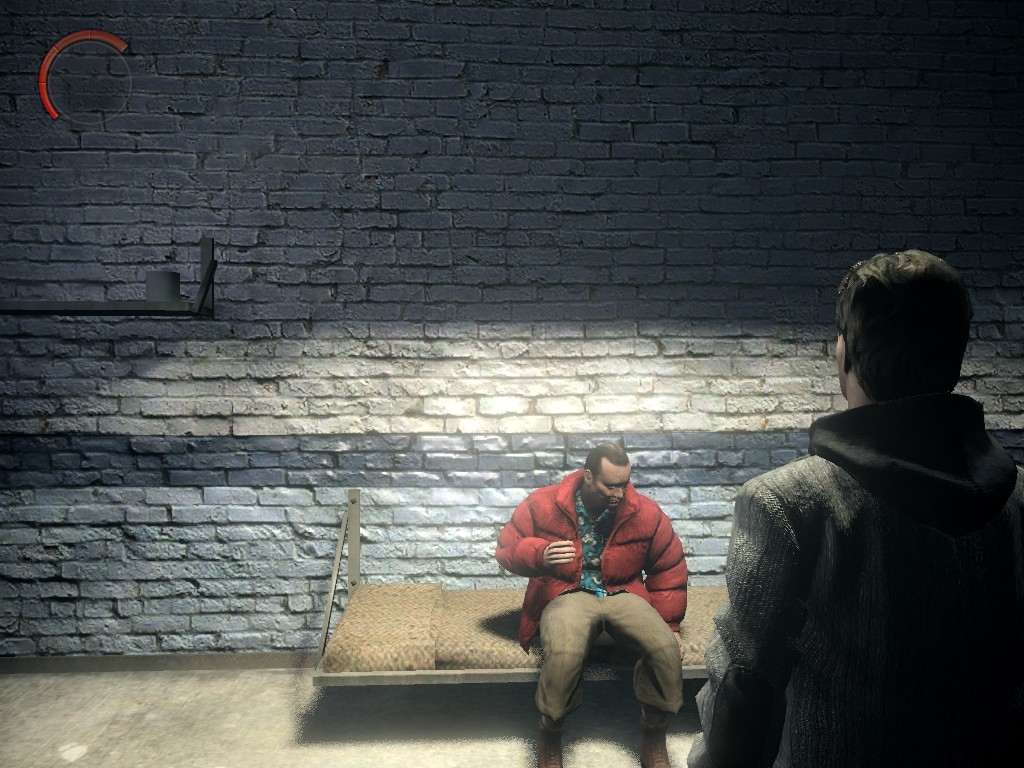
I passionately hated Alan Wake and its soooooo cliché story of a writer dealing with very malevolent ghosts that interfere with his writing as much as his personal life. Stephen King has written all about it and there's not much more to say. All this would have been forgivable if this scenario had not been a pure pretext for a nasty survival-horror where you have to escape from heaps of enemies to have the right to watch the next cinematic and have a few minutes of pure exploration, here and there; rather nice sceneries  actually, that you'd like to see really serve a purpose – and they helped me to verbalize out loud, during the game, that I was absolutely, absolutely fed up with the place I live in and that I'll have to change my surroundings, just to survive. At least that's what it was for...

Alan Wake [français]


J'ai passionnément détesté Alan Wake et son histoire plus-cliché-que-moi-tu-meurs d'écrivain aux prises avec des fantômes très malveillants qui parasitent son écriture autant que sa vie privée. Stephen King a tout écrit sur le sujet et il n'y a pas grand-chose à en dire de plus.

Tout cela aurait été pardonnable si ce scénario n'avait pas été un pur prétexte pour un survival-horror horripilant où il faut échapper à des monceaux d'ennemis pour avoir le droit de regarder la cinématique suivante et quelques minutes d'exploration pure, ici et là, volées à une histoire qu'il faut suivre docilement ; des décors plutôt jolis et dont on aimerait qu'ils servent réellement à quelque chose – et qui m'ont aidé à verbaliser à haute voix, en cours de partie, que j'en avais absolument, absolument assez de l'endroit où je vis et qu'il va me falloir changer de cadre, pour simplement survivre. Ça aura au moins servi à ça...

vendredi 8 février 2019

La Tempête

Après une bonne année de corrections, d'améliorations et de travail sur une version anglaise, mon jeu La Tempête sort enfin, dans les deux langues, sur itch.io :

https://idiotmystique.itch.io/la-tempete
https://idiotmystique.itch.io/the-storm


Il est évidemment disponible aussi dans sa nouvelle version sur le site de référence en France :

http://www.fiction-interactive.fr/la-tempete/

Je ne connais pas les statistiques sur ce dernier site, mais je dois dire que sur itch.io, jusqu'ici, ce n'est pas très glorieux : 8 téléchargements pour la version française (mais il est vrai qu'on peut y jouer en ligne : je ne sais pas combien de personnes l'ont fait) et 34 pour la version anglaise.

La fiction interactive est un petit monde où il y a au moins autant d'auteurs que de joueurs, et où il est donc difficile d'obtenir l'attention de ses confrères, absorbés eux-mêmes par le développement ou la promotion de leurs propres œuvres. Et à part le webzine SPAG, qui chronique de manière sélective et élitiste (et ce n'est pas un reproche), et évidemment les "réseaux sociaux" comme on dit au journal télévisé, il existe assez peu de moyens, au final, de se faire connaître du public, et pire encore, du public qui existe... peut-être, au-delà de ses pairs.

*

Mon but en commençant ce jeu il y a un peu moins de deux ans, à une époque où je bossais à 100% sur des fictions interactives à liens hypertextes, était de retrouver ce "bon vieux feeling" du parser, que j'avais redécouvert en jouant à Untold Stories (épisode 1) mais en dépassant une bonne fois cette limite du "je ne sais pas quoi taper / je ne sais pas comment formuler ce que je veux faire" qui bloque tant de joueurs – et moi le premier.

Deux grandes pistes, donc :

– Une implémentation maximale – il m'est insupportable d'avoir une réponse d'erreur (ou ultra-générique) dans un jeu, quand je veux examiner, par exemple, un objet décrit dans le texte d'une room.

– Essayer d'intégrer un maximum de synonymes pour les verbes et les noms, et veiller à ce que les expressions de la vie courante soient correctement comprises par le jeu. Par exemple, "prendre un bain" ne signifie pas PRENDRE un objet BAIN. De même que "pousser la porte" signifie en réalité l'ouvrir...

Pour donner quelques exemples concrets :

J'ai remplacé la plupart des réponses de base des actions, ou en ai crée.

An InteractiveFiction has some text called JumpingResult. The JumpingResult of an InteractiveFiction is "Vous n[']avez aucune raison de faire cela".

La kind InteractiveFiction me permet, au début de chaque jeu, de déclarer "(Nomdujeu) is an InteractiveFiction" et ensuite d'adapter les réponses des actions comme j'en ai envie.

SuperMario is an InteractiveFiction. The JumpingResult of an SuperMario is "Bravo, vous avez compris le principe du jeu".

J'ai essayé de développer autant que possible l'action "utiliser", en lui faisant détecter, selon l'objet auquel elle s'applique, la réponse la plus pertinente. Quelques exemples :

– Utiliser un container, une porte ou une fenêtre, équivaut à l'ouvrir ou le/la fermer, selon son état.
– Utiliser un objet mangeable, équivaut à le manger.
– Utiliser un objet que l'on peut, équivaut à le lire.
– Utiliser un vêtement équivaut à le mettre.

Au passage, cela a demandé de créer certaines kinds, comme les fenêtres, ou les vêtements. Le genre d'objet que l'on peut retrouver dans n'importe quelle fiction interactive ou presque, quel que soit son cadre.


(Cliquer pour élargir)

Le but de tout cela n'étant pas d'appauvrir Inform 7 mais de permettre au joueur qui ne sait comment formuler exactement une action, de tenter le tout pour le tout avec le verbe "utiliser".

Parallèlement, pour éviter justement au maximum les situations où le joueur ne sait pas quoi taper, à cause d'un parser trop exigeant, j'ai cherché à multiplier autant que possible les synonymes, du genre :

Understand "prendre [direction]" or "prendre ->/à/a/au/en/vers/par [direction]" as going when ParserON is true.
Understand "aller ->/à/a/au/en/vers/par [direction]" or "aller [direction]" as going when ParserON is true.
Understand "avancer ->/à/a/au/en/vers/par [direction]" or "avancer [direction]" as going when ParserON is true.
Understand "marcher ->/à/a/au/en/vers/par [direction]" or "marcher [direction]" as going when ParserON is true.
Understand "cheminer ->/à/a/au/en/vers/par [direction]" or "marcher [direction]" as going when ParserON is true.
Understand "courir ->/à/a/au/en/vers/par [direction]" or "courir [direction]" as going when ParserON is true. 

Ou encore :

Understand "actionner [something]" or "allumer [something]" or "demarrer [something]" or "commuter [something]" or "mettre [something] en marche/route" or "mettre en marche/route [something]" or "remettre [something] en marche/route" or "remettre en marche/route [something]" as switching on when ParserON is true.

On remarquera le "when ParserON is true". C'est un truth state que j'ai crée pour pouvoir tout simplement désactiver le parser quand j'en ai envie – par exemple pour passer, dans un jeu, du parser à des liens hypertextes, sans risque que les deux approches se télescopent.

*

J'ai simplifié / automatisé certaines choses, comme par exemple avec la commande "allumer la lumière" (formulable de diverses façons) qui détecte automatiquement tous les luminaires dans une pièce, et les allume, s'ils sont éteints. L'inverse fonctionne aussi. Le but n'étant pas uniquement d'ajouter un gadget technique au jeu, mais de progresser vers une compréhension des expressions les plus quotidiennes, les plus banales, les plus naturelles qu'utilisent les gens – sauf les joueurs professionnels de fictions interactives, qui ont l'esprit perverti par plusieurs décennies de jeux à l'approche ultra-analytique.

*

Les rooms sont systématiquement doublées par des backdrop (à la room ChambreRoom est lié le backdrop ChambreBackdrop, par exemple) qui me permettent aussi bien de gérer les déplacements que les actions en tous genre (penser à, fouiller, etc) que l'on peut imaginer.

The CuisineBackdrop is a Lieu. It is everywhere. The EnteringDestination of the CuisineBackdrop is CuisineRoom. The ExitingDestination of the CuisineBackdrop is JardinRoom. Understand "kitchen" as the CuisineBackdrop. The printed name of the CuisineBackdrop is "kitchen". The noise of the CuisineBackdrop is "[the Noise of CuisineRoom]". The ThinkingResult of the CuisineBackdrop is "A well-equipped room, brand new and immaculate. A dream kitchen, that looks as if it has never been used, as perfect and impersonal as a photo in a magazine. If someone ([italic type]but who ?[roman type]) asked you, you would say, without hesitation, that you love cooking and spending hours at the kitchen counter. Yes, without hesitation. No doubt about it".

Ainsi, si n'importe où dans la maison, le joueur tape "aller dans la cuisine", ou "penser à la cuisine", c'est le backdrop qui est détecté et qui répond à l'action. Soit par une réponse narrative (The ThinkingResult of the CuisineBackdrop) soit par un déplacement (vers la EnteringDestination du backdrop).

*

Ce ne sont là que quelques exemples de ce que je tente de faire pour sortir des jeux à parser qui offrent une souplesse d'utilisation et un niveau de réponse au joueur, satisfaisants.

Je travaille déjà sur un autre jeu, très réduit lui aussi en nombre de rooms et d'objets, mais où je cherche à pousser beaucoup plus loin la variété des actions possibles, et des formulations possibles pour les accomplir. J'en dirai plus quand il y aura quelque chose d'un tant soit peu présentable.

vendredi 26 octobre 2018

Vingt ans de rêves

J'ai commencé à noter mes rêves, aussi systématiquement que possible, en 1998, quand j'ai quitté ma famille pour aller étudier dans la "grande ville".

J'accordais déjà une certaine importance à la chose, depuis l'adolescence et même l'enfance ; sans doute comme tout le monde, j'avais gardé un souvenir très vif de rêves parfois extrêmement anciens, qui au même titre que certains souvenirs de la vie réputée réelle, avaient fini par intégrer mon paysage mental. Je me souviens aussi, au lycée, d'après-midi où je restais couché au lit, sur de la musique, essayant de trouver ce point précis de la somnolence où des images précises, réalistes, troublantes, naissent dans l'esprit, sans que l'on soit réellement endormi.

J'avais décidé, pendant les vacances, d'entamer un journal intime. La perspective de devenir étudiant, de me retrouver seul dans une grande ville, de changer presque entièrement d'entourage et de mode de vie, m'avait fait ressentir la nécessité d'entamer de nouvelles choses, d'aborder la vie d'une manière nouvelle et plus réfléchie – notamment de cette manière. Dès les premières semaines, j'avais commencé à noter des rêves, par-ci par-là. Leur caractère souvent dérangeant m'avait étonné mais aussi intrigué et quelque peu excité – intellectuellement mais aussi artistiquement.

Peu à peu, l'intérêt nouveau que j'avais trouvé à la chose m'a convaincu d'entamer un journal à part, entièrement dédié à ma vie nocturne. J'utilisais un cahier à spirale et à gros carreaux, dans lequel je me sentais obligé de faire des croquis, des plans, des portraits de choses et de personnes vues en rêve, comme s'il était nécessaire de transformer cette simple habitude en une démarche artistique ou mystique à la C.G Jung avec son fameux livre rouge.

Mais quel autre prétexte prendre, et comment se lancer dans ce genre d'entreprise sans en avoir un, ne serait-ce que "trouver des idées à exploiter de quelque manière que ce soit ensuite" ? Le seul argument gnothi seauton ne suffit pas ; noter ses rêves, et qui plus est pendant des années, est une entreprise en réalité hautement inutile au mieux, mentalement toxique plus vraisemblablement, spirituellement aussi d'ailleurs (Saint-Paul condamne ceux qui "donnent trop d'importance aux choses qu'ils voient en rêve") et socialement consternante car l'obsession que cela devient transparaît dans la vie quotidienne et les conversations ; combien de fois me suis-je retrouvé à raconter mes rêves de la nuit à des gens qui ne m'avaient rien demandé...

C'est un hobby addictif, également. Il m'est arrivé un certain nombre de fois de passer des après-midi à siester, dans l'espoir d'avoir quelque chose d'intéressant à noter à mon réveil ; j'ai quelques souvenirs comme ça, spécialement déprimants, d'après-midi obscures d'automne, de réveils pâteux et désagréables à la tombée de la nuit. Mais l'addiction est bien là, et d'autant plus forte qu'il est fréquent, lorsque l'on couche sur le papier un rêve que l'on vient de faire, de se retrouver submergé d'autres rêves, jusque là oubliés, et dont on a l'impression qu'on ne dispose que de quelques secondes pour les noter avant qu'ils disparaissent à nouveau, pour toujours ou non – et l'on se demande, dans ces moments-là, dans quelle zone du cerveau ces rêves sont stockés, et quel poids insoupçonné ils ont sur notre psyché, dans l'hypothèse où réellement l'esprit ne les oublie jamais vraiment.

Écrire à la main dans un bon vieux cahier a toujours eu, et a encore pour moi, même si je ne le pratique plus beaucoup, un aspect très attirant, pour le côté forcément unique, et très personnel de l'objet que l'on se crée peu à peu. Mais comme tout le monde, par soucis d'efficacité et de gain de temps, j'ai fini par passer au PC. C'est alors que j'ai noté mes rêves non pas dans le bloc-note ou sur un quelconque document personnel, mais sur un blog public, que j'ai d'emblée voulu collectif. Avec mon amie de l'époque et quelques amis, j'ai donc ouvert Le Sonde-Ténèbres puis plus tard, avec un effectif plus réduit, l'incroyablement originalement nommé Journal des Rêves.

J'ai continué, bon an mal an, au fil du temps, jusqu'à aujourd'hui – ou pour être précis, jusqu'à fin 2018, considérant que vingt ans étaient suffisants, qu'ils fallait passer à autre chose, accorder moins d'attention à cette partie de ma vie – et tant pis pour gnothi seauton.

Ceci étant, mes récits de rêves m'ont servi à tout : idées de scénarios pour des nouvelles, pour des F.I, pour de la musique, pour apporter certains changements à ma vie réelle et diurne... Le résultat n'a jamais été très satisfaisant, pour être honnête, à tel point que j'ai à peu près arrêté d'essayer d'en faire quelque chose – sans pouvoir arrêter de les noter pour autant. L'intérêt réel de la démarche m'a toujours échappé et m'échappe encore, je sens qu'il existe, qu'il est formulable, je l'ai sur le bout des lèvres et pourtant...

mercredi 5 septembre 2018

Caught in Flux


A few weeks ago I got back the Amstrad CPC 6128 that I had left at a distant (in every sense of the word) ex-girlfriend's place in Meuse.

My floppy disk collection went with it, and I found a program that I remembered existed, but not really what it contained or what it looked like technically speaking: a draft of an interactive fiction, which I don't know why, I remembered very vaguely, but thought I had written it as a child. But I didn't get my CPC until 1991, when I was 11.

Anticipating at the time that I would be senile before my fortieth birthday, I indicated at the beginning of the program its creation date: 1995. So I was already living in the house where my parents, my sister and I moved in 1993, while in false memories, which I held to be absolutely true, I saw myself typing this code in our very first apartment. Also according to the information in comments at the beginning of the code, my old friend Xavier participated. At first I wondered why, but then I realized that he was the one who provided me with the initial code template from which I could start my little game. Without him, nothing would have been possible.

The game – which is called Les Masques du Carnaval – has a few rooms, namely the rooms of a house that you are supposed to get out of by solving a minimalist puzzle. There are corpses, masks, a clown and an acrobat (?) to whom you can talk but who are hallucinations. I wouldn't go so far as to say that this is the matrix of Azthath, but between La Ville, this thing, and Azthath, let's say that there is a continuity of obsessions.

I will try to debug this game and include it in my official bibliography. After all...

Parenthesis about L'Observatoire

I've been working a lot, a lot on L'Observatoire these last few weeks, and I realize that I have to take regular breaks, like when you have to come back to the surface after a breath-holding dive, because the content of this game is so toxic and painful to me. I can't wait to finish it and move on, for good.

A friend of mine answered me, some time ago, when I asked her if she wrote down her dreams (since she had just told me the one of the previous night): "No, and I don't keep my dirty Kleenex". It was a bit bluntly formulated but undeniably right; you don't keep your dirty Kleenex, and if you do, you don't eat them as a bonus, hoping to find yourself well nourished, able to produce something good. And yet that's what I do. It's my daily bread.

I think I'm going to take a big, big break from I.F – at least the ones related to Azthath – when I finish this game. Just to detox a little bit and rest, because I'm really tired, mentally tired, lately, and I need to do nothing, or something healthy and down to earth.

*

That said, L'Observatoire is growing, inexorably. I calculated 21,000 words for a walkthrough (and the other possible choices should yield a fairly similar result), which is three times the amount of text in the original game, released for Comp 2016.

I'm trying to enrich the story, the "amount" of background and memories for the player-character to go through before entering the Observatory itself, but also – annoyed and a bit offended by some comments like "I feel like I'm clicking through a book and not playing" – to improve and enrich the actions proposed to the (player-character), as it's true that even for a game based on memories and the past, the player himself has to be given something to do other than reading.

I've almost finished the first part of the game, the one before the final dialogue with Paloma and Hartmann, which I intend to extend and enrich as well. So in the end, it will be a "big" game. As big as possible, because I have no idea when another chapter of Azthath will be released. A few years?


However, I'm not making it an RPG with two thousand quests, as many NPCs, and a map the size of a country. L'Observatoire remains an intimate game, covering a short period of time (one evening) in the lives of its characters.

The more I progress, the more it seems to me that a certain unity of time and place is desirable in an I.F – one can always fantasize about a game that would make us travel through hundreds or thousands of rooms that would be as many wilderness areas, villages, cities, countries, where we would meet more NPCs than we can handle. ... and I still have this fantasy from time to time (if only for Azthath itself, the city), but I realized that it is with a formula like the one of L'Observatoire that I work best, and that I have the best chances to finish what I start.

Hence the subdivision of Azthath into chapters, and then into small independent games – I'll probably end up publishing one sentence after another, or object by object...

Existential self-cannibalism

It was L'Observatoire, with its zone – corresponding, except for a few details, to a neighborhood of my youth – that gave me the idea of doing the same experiment with multiple real-life places: isolating small portions of them and making them, almost as they are, zones for I.F or fiction. I keep them in my notes, in case they can be used one day.

What struck me each time I identified an exploitable zone (because not all places are exploitable, but I couldn't say precisely what makes a "zone" one) is the fact that I would have been unable to imagine it myself, as it is, with all its elements, banal or exceptional.

It is their coexistence, their juxtaposition that makes the salt of the "zone". The real world is always more imaginative than a writer's or a coder's brain – just as the history of the real world is always more exciting and improbable in its richness and beauty than any fictional fantasy world; and as such, I am increasingly detaching myself from anything in Azthath that was too heavily "fictional world imagined in its minutest details and desperately trying to be original" – and failing to do so.

*

Beyond these well-defined, identified areas, which I am accumulating endlessly, I have undertaken an even more exhaustive list of all the places I know that could be of interest as settings for fiction.

I do the same with all the people I have met in my life. Because I couldn't possibly imagine characters as complex, moving or crazy as the people in the real world. There are usually only ultra-minor, cosmetic changes that need to be made in order to project them into a story.

"Write about what you know," as aspiring writers are told... And finally it's true, true in a frighteningly concrete way. There is nothing that works better than to pick directly from the heads we see in our daily lives, from the places we frequent, from the stories we hear, barely transposing them, so little, in fact, into fictions.

Cannibalize the real. Be an absolute capitalist with your own life: make everything profitable. Be your own pimp.

Phantom parcels

The last "zone" that came to my mind was a neighborhood in Saint-Mihiel, in the Meuse. I lived there for a few years, together with a girl who lived there, and who is the same girl from whom I recently got my CPC. I started working on Azthath at her house in 2008 or 2009.

When I went back there a few weeks ago, nothing had changed in the streets or in the big old house (from the 18th century) where she lived at the time and on the first floor of which her parents' store is still located. Nothing but a vague embarrassment, and a baby in the living room, who even before knowing how to speak, was telling me that I had nothing more to do there, that I had to take my things and get out as soon as possible. Which I did without asking for help.

*

I think about Saint-Mihiel from time to time, to certain streets where we used to walk, certain routes in particular. I see scenes, memories in the form of scenes, probably untrue, because any account of one's life, to others or to oneself, is a lie, a fiction – which makes it perhaps a little less serious to prostitute one's memories and one's whole life in the form of stories for the public.

I was intensely, unimaginably unhappy in that city, and yet I remember it today with a strange pleasure, a strange attraction, and I can only explain it by telling myself that all of this – the setting, the moods, the images that come back to me – make a pretty good framework for fiction.

I wanted to see again the rue Jeanne d'Arc, this street near the Meuse, narrow and made of rather high and seemingly uninhabited buildings – one of them was really uninhabited and fascinated me – where we used to walk the dog regularly, at dusk. I wanted to see it again by going on Google Street View, which is gradually becoming my interface with the real world, as there are so many places where I don't want to go anymore, or can't go anymore – and having the sublime advantage, often, of not being updated, which allows me to visit the said places as they were and are not anymore.

But the street was not available on Street View. It was part of the inaccessible areas of the Net, as there were in Second Life, about which I wrote because they fascinated me.


"Dead parcels. Or ghost parcels. There are areas in Second Life that you can't enter. You can see what's there – vegetation, houses, roads, sometimes whole neighborhoods – since there are no borders, no walls; but you can't enter. You're walking, you're flying, you're going straight to a strange and lonely house in the middle of a plain, and suddenly an invisible wall stops you; a pop-up informs you that the plot has been banished and that it is impossible to enter.

Is there a way to get in anyway? And if so, how is it, once inside?

The memories of a life are also strewn with banished parcels, dead parcels, ghost parcels. The streets I never walked down. The houses I never entered, and where I will never enter, which were for me only elements of scenery, a trompe-l'oeil of a theater stage - and yet real, for others, but of a reality to which I will definitely never have access. The dead parcels of my inner space. And how many houses I have actually entered, in the past, how many people I have known, how many thoughts I have had, that today I can only see from the outside, knowing that they existed, that they were experienced from the inside, but where I can no longer enter? Dead parcels of my own memory."

The dead parts of my own memory are numerous, decidedly, I realized it while browsing the whole city on Street View afterwards. How many streets, houses, gardens, semi-ruins, architectural details have turned my stomach, under the blow of an emotion that is not even linked to what I could have lived there at the time I was actually going there, but to the mere fact of recovering the memory.

*

The friend who introduced me to interactive fiction is named Eric and I knew him because he had a group called Anamnèse. Anamnesis: opposite of amnesia. Recollection.

*

Every street is a mystery: what is behind the facades, the doors, the windows? I often ask myself this question while walking around, especially in the streets I know best, where I grew up, and where I sometimes realize that I have never been inside their buildings, that I have no idea what the homes and the people who occupy them look like, nor their backyards, their gardens, their cellars.

In 2006 I worked at the local supermarket in my hometown as an appliance deliveryman. This was an opportunity to enter an unexpected number of houses that I had always known from the outside, and to finally get to know their interior configuration, their decoration, their atmosphere. Entering such places was both to discover a little more of the real, and to penetrate the aesthetic, emotional, moral, etc. worlds of the people who lived or had lived there. I remember an old bourgeois building, downtown, which seemed to have crossed the twentieth century without moving a hair. I also remembered a low-income building where I had never dared to set foot, and where this time a little girl with the hoarse voice of a mysterious old smoker had guided me to my client, through deserted corridors, with walls riddled with holes, and even in some places with enough holes for a man to pass through; it was like a video game.

*

It also reminded me of some of the dreams of my youth, where I explored stairwells that went on forever, or sometimes opened onto other streets, buildings containing streets and other buildings – a city within a city, interlocking worlds, and secrets. Something of this remains in Azthath, where one can get lost in seemingly endless corridors, where dwellings, shops, abandoned areas, occult temples, squats, thugs' hideouts, can follow each other in a totally incoherent way in an urban labyrinth, interior and invisible from the street.


Each memory is also a street, full of obscure windows, doors that could have been opened but to which we will never know what they lead – or even, that we did open, once upon a time, but that what they led to has been erased from our memory.

We might as well make a fiction out of it, consciously.

*

When I drew up a list of places in the Saint-Mihiel district that I wanted to use for fiction – a bistro, a gun shop, an abandoned building, an old covered market – it appeared to me that they could all have a real role in a fiction, but above all they all had, once they were put in relation to each other, a weight, an even greater novelistic charge – implicit, undetermined for the moment, but clearly detectable, guessable. No need to invent painfully: reality provides all that is needed.

Artificiality cherished

I took a walk a while ago, just before dawn, on a path along the Saar River, near my home. It runs along fields, buildings, a retirement home, a soccer stadium. A footbridge leads to the supermarket parking lot; just after, still on the water's edge and already on the parking lot, there is a strange, unexpected place, where there are picnic tables, reeds, street lamps.

This mixture of concrete and nature, this juxtaposition of places with totally different functions, gives the place a totally incongruous and artificial side. It's something I've loved for a long time, for reasons that partly escape me. But I have always felt particularly comfortable in zoos, amusement parks, vacation villages, shopping areas and the most artificial residential areas, all places that I feel are fake, ahistorical and whose very design prevents any sociability and any "normal" life. Places where to live a peaceful, restful alienation.

*

This artificial, unreal atmosphere, and the streetlights at the water's edge, while darkness was still almost total, made me think about a reflection I had already made: they gave the impression of being, in a video game, discrete spatial markers, intended to guide the player, without him even realizing it, towards the right destination.

This is not the first time I feel this strange impression of being "in a video game". This is what I wrote in November 2009, when I used to walk around the city at night.

"Illuminated houses: fantasies of unlived lives, the syndrome of the lost traveler and "what could happen if I knocked", stories and characters that emerge from the smallest detail seen through the window. More than the house that we spy and the interior that we try to see, it is always our own house; we are voyeurs of ourselves, we want to discover ourselves. Images of decrepitude, of death. Solitude of the walker.

Cité Malleray. The feeling of being in a video game. The video game as a mode of existence and experience of reality and novelty. Exploration. Trip, waking dream. Nothing is real. Loneliness once again.

In front of a beautiful house: I place myself in relation to the streetlight and the branches of the trees above me, to have the most beautiful light and the most beautiful framing. I realize that I don't see reality, I see my fantasies, and I don't approach reality as a reality, but as an aesthetic material, a work of art that would only ask to be fixed, by pressing a button.

I went up to the cemetery; I did not know the place at all, I discover the geography of the city in real time. Impression again to be in a video game. The solitude allowing almost any action. The full moon, enormous, yellow, Lovecraftian. Subtle change of atmosphere, from one step to the next, like several times during each walk; because each street corner, each architectural nuance, each subtle change of lighting takes to other inner worlds."

These psychogeographical strolls coincided with my return to video games, my discovery of interactive fiction, and, overall, my unhappiness with Laurence – not because of her, but with her – from whom everything was good for mental escape.

To the slaughterhouse

Beyond the private unhapiness, it is undoubtedly the decrepitude of Saint-Mihiel and the atmosphere, on the one hand extremely natural, wild, and on the other hand heavily historical of the surrounding region, incredibly depressing and anxiety-provoking, which aroused in me this need for the artificial and even the virtual.

It is a region of immense forests, orchards and tiny villages. One feels far away from everything, in a world of hunting and miserable agriculture, in an indefinite past, a kind of "old France" eternity marked forever by the First World War. There are still German and French trenches, intact, walkable, a few hundred meters from the houses, and where the tourists – concentrated in Verdun, 30 minutes away – do not come. There is not an acre of land that is not a cemetery.


My parents-in-law at the time had a large garden and orchards below Les Éparges, the peak that had been completely reshaped by the bombs. There were thousands of dead per square meter. My father-in-law could not turn over the slightest clod of earth without bringing out shrapnel, bones, and remains of all kinds (I kept a certain number of them at home for a few years before throwing them away to purify the mental atmosphere in which I lived). A little further on, in some forests, the earth was still poisoned. Nothing could be done with it for decades, maybe centuries.

*

There was (and still is) a chicken farm, near St Mihiel. Just after the town, in the middle of the forest. How do you say? "Born, raised and slaughtered in France". This minimal biography would have been more than adequate for the hundreds of thousands of soldiers who came to be killed in the vicinity, advancing quietly, in line, towards the industrialized massacre. Just as one lines up to take the subway.

*

As I've been thinking about this lately, I've realized that being French has always been, for me, being caught up in a flow and a collective belonging, without me really asking myself about the content: being French was, in my childhood and teenage imagination, going to school, taking the subway, stopping at a truck stop when I went on vacation with my parents, in the midst of other French people, from the four corners of the country, of whom I had only a vague idea.

It was a series of collective experiences, perfectly framed, where I had no need to be an individual and no questions to ask myself. It was an abstract and mostly infrastructure-driven vision. But as a Frenchman from the margins, from a region that has always oscillated between two countries, two languages, two destinies, it was all that was available to me.

Something of this conception remains in my love of commercial zones and all artificial places where the total codification of behavior, where maximum enrolment dispenses with any individual life, any risk of separation from others – since they also forbid any real rapprochement.

*

I started working on Inform 7 with this girl, with the help of Eric who typed the first draft of the Azthath code, to show me how it worked, while I was initially going to write an CYOA (of which there is still a draft online with paragraphs that I will have to recycle one day).


Azthath, like the video games or Second Life, was from the beginning a way to escape, in the imagination, the heaviness and the depression of this French environment, riddled with history, as one is riddled with bullets.

A fantasy of a world out of time and a melting pot of multiple styles and cultural influences, a sort of double of Nancy, mixed with Paris, Cuba, Prague, who knows what else...

But the theme of war, of destruction, of massacre, of the whole society being regimented, brutalized and deformed – culturally, morally, politically – for decades by the experience of war, quickly invited itself, infiltrated in Azthath, until it became obsessive and overshadowed everything else.

"It's French, madam, it's french I.F"

I've been fantasizing for two or three years about writing an I.F whose settings, social context, etc., would be inspired in part by Saint-Mihiel (and a few other equally decrepit little towns in the region, like Blâmont or Fénétrange).

What appeals to me most in the idea is the 100% French context, absolutely nothing but French, in which the story would be set. Not out of misplaced patriotism, but because French fiction is rarely inspired by the reality, past or present, of France – except for the Parisian theme, and even then, it is less a reality than a series of marketing clichés intended to attract tourists who will soon fall victim to the syndrome that strikes so many Japanese.

French fiction, therefore, is far too much inspired by the international, Anglo-Saxon model, and I myself sacrificed it by working on locations in my region, such as sawmills, lakes, foggy forests, roadside bars... to be reused in stories, and by saying to myself "Great, it's like Twin Peaks". As if it was necessary to pass the French reality through an American filter to make it valuable.

It became a subject of reflection for me since a discussion with Monsieur Bouc, when Hugo Labrande's game, Le Kebab hanté, was released. He told me that it was admirable because you would never see it in an Anglo-Saxon game; the kebab is a Franco-French reality, almost exclusively. This is of course very debatable (we eat as many kebabs in Germany, and probably everywhere in Europe, as in France) but this idea of cultural and daily realities, really specific, inimitable, and ignored until now by fiction, interactive or not, has marked me.

Figre Tibre talks about this in a recent video where he talks about his game Antioch, whose characters are "very French" policemen, who talk, eat and take their time, and are neither CSI in Miami nor Sherlock Holmes.

Conclusion(s)

I remember that my girlfriend at the time had recurring dreams of floods, of rising waters. It became for me the symbol of a catastrophe as much psychic as concrete, collective, and I kept it in a corner of my head, for a fiction, interactive or not, "one day". This image obsessed me too. And all the more so as it resonated with the cover of a record I was particularly listening to at the time, and whose title alone, Caught in Flux, upset me, in the same difficult-to-explain way as the Talking Heads' song (and video), Road to Nowhere. To be caught in the flow of days, in the flow of one's consciousness, in the flow of historical events, of life quite simply, without ever being able to get out of it, or even slow down. And this flood that destroys everything at the same time as it is a relief, when the pressure has become unbearable.


This LP was given to me by a certain Laura, in Nancy, in 2002.

She continues her little life with me, under the name of Paloma, in L'Observatoire. But basically, even if we still talk to each other, we don't have much to say to each other anymore, and it would be reasonable, one day, to cut the cord for good. Just as it would be good to cut the cord with Laurence, whose baby on the couch, even if it didn't speak yet, was telling me nothing but "You don't belong here anymore".

*

For the first time, during my last walk in Nancy a few weeks ago, I passed by a gate in an alley in the old town, which leads to a courtyard of a building, at the end of a corridor, and that had always fascinated me – like all the "secret" passages and everything that hints at streets, neighborhoods, hidden, private, necessarily mysterious worlds, cities within the city, like the ones I saw in the dreams of my youth that I recounted above, and that are found in Azthath.

Well, there, for the first time, it was open and I was able to enter, and of course there was nothing to see except a courtyard. I look back on it now with a strange relief, and a bit of sad amusement, because it's a perfectly acceptable end point for a story – a twenty-year story. It's as if in a merciful move Nancy said to me, "See? A yard is a yard. Buildings are buildings."

It's as if the city was saying, "See, I have no mystery to hide from you. Let it go. You don't belong here anymore."